
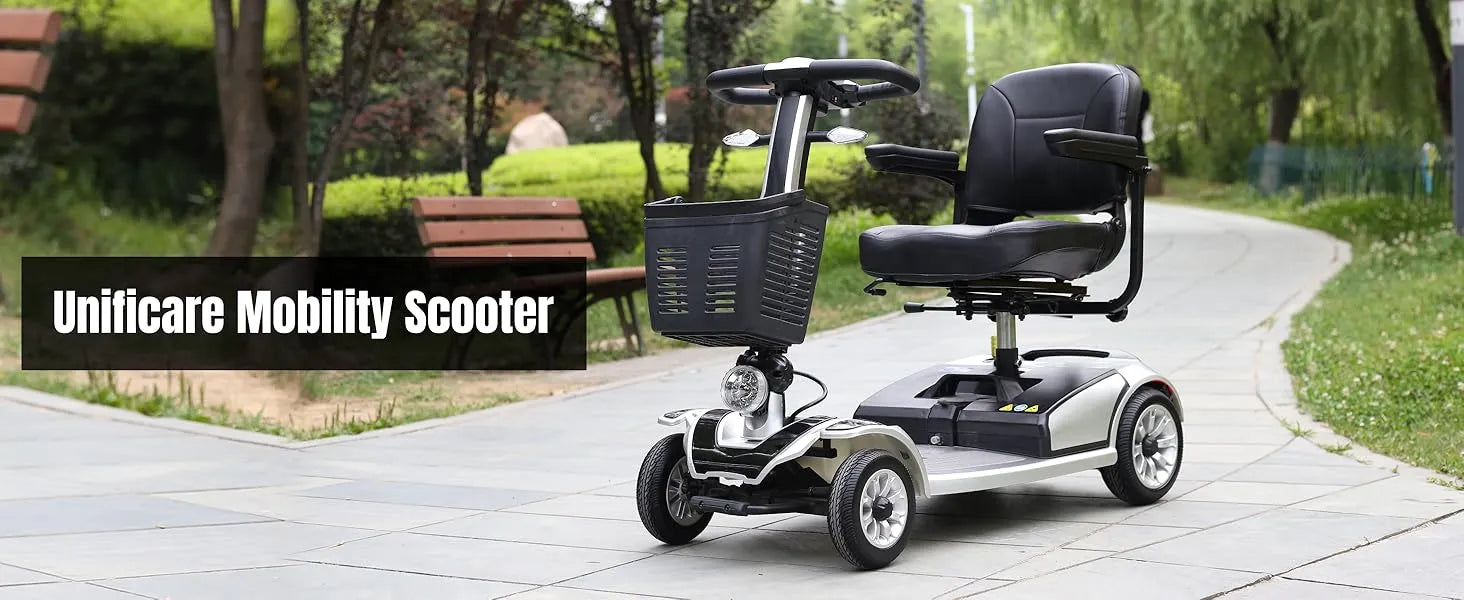
A mobility scooter can be a convenient way to travel when walking long distances is difficult or when you simply need an easier way to get around. However, if you've never used one before, the controls, steering, braking, and turning can take a little time to get used to.
The good news is that most mobility scooters are designed with relatively simple controls. With a little practice and the right safety habits, new riders can become comfortable with everyday operation.
This guide covers what you should know before, during, and after riding a mobility scooter.
Before You Ride: Get to Know Your Scooter

Before taking your mobility scooter outside, spend some time becoming familiar with it.
Although controls vary between models, you'll typically find:
-
Power switch or key
-
Battery level indicator
-
Speed adjustment
-
Throttle or drive control
-
Forward/reverse selector
-
Steering tiller
-
Horn
-
Braking system
-
Lights or turn signals on some models
Don't assume that every scooter operates exactly the same way. Read the owner's manual and identify each control before your first ride.
Check These Things First
A quick inspection can help prevent problems once you're on the road.
Check that:
-
The battery has enough charge.
-
The tires appear properly inflated and undamaged.
-
The seat is securely attached.
-
The steering feels normal.
-
The brakes work correctly.
-
Nothing is hanging near the wheels.
-
Lights and other controls work if your model is equipped with them.
If something doesn't feel right, don't start your trip until you've identified the problem.
Your First Practice Session
You don't need to learn everything in a busy parking lot or on a crowded sidewalk.
For your first few rides, choose a flat, open, and quiet area with plenty of room around you. An empty parking area or private paved space can be a good place to practice, provided it is safe and permitted.
Start with the speed turned down.
Practice the following movements individually:
Moving forward
Use the throttle or drive control gently. The scooter should begin moving gradually rather than suddenly.
Stopping
Release the drive control and learn how quickly your scooter comes to a stop. Practice several times so you understand its braking response.
Steering
Make wide turns first. Once you're comfortable, practice tighter turns at a low speed.
Reversing
Look behind the scooter before reversing. Move slowly and avoid relying only on the reverse warning sound.
Parking
Practice bringing the scooter to a controlled stop and positioning it in a designated area.
Spend enough time practicing these basic movements until they feel predictable.
How to Control Your Speed
One of the most important skills for a new mobility scooter rider is learning to control speed.
Higher speed isn't always better. A slower setting gives you more time to react when you're:
-
Riding around pedestrians
-
Entering a store
-
Going through a narrow passage
-
Approaching a corner
-
Crossing a driveway
-
Maneuvering around parked vehicles
A good approach is to adjust your speed according to your surroundings.
Open and clear area → comfortable speed
Crowded or narrow area → slow speed
Tight turns → slow down before turning
Don't accelerate quickly simply because the path ahead is clear. Smooth acceleration and gradual braking make the scooter easier to control.
Turning Without Losing Control
Mobility scooters are generally easy to steer, but turning requires more attention than simply driving straight.
Before making a turn, reduce your speed. Then turn the handlebars smoothly rather than making a sudden steering movement.
Extra caution is needed when:
-
Turning on an incline
-
Driving on uneven ground
-
Making a very tight turn
-
Carrying a heavy load
-
Traveling at higher speeds
Avoid making sharp turns at maximum speed.
Riding on Different Surfaces

Where you ride can significantly affect how your mobility scooter handles.
Smooth Pavement
Smooth pavement is generally the easiest surface for beginners. Even here, watch for cracks, potholes, and unexpected obstacles.
Grass
Some mobility scooters can handle grass, but performance depends on the scooter's tires, motor, rider weight, and ground conditions. Wet or soft grass can make steering more difficult.
Gravel
Loose gravel can reduce traction and make steering less predictable. Slow down and avoid sudden turns.
Wet Surfaces
Rain and water can make surfaces slippery. Reduce your speed and avoid puddles whenever possible. Always follow your scooter manufacturer's instructions regarding water exposure.
Going Up and Down Slopes
Never assume that a mobility scooter can safely climb every hill.
Every scooter has limits based on its motor, weight capacity, tires, battery, and design. Check the specifications and owner's manual for the recommended maximum incline.
When approaching a slope:
-
Reduce your speed.
-
Approach the slope straight on when possible.
-
Keep both hands on the steering controls.
-
Avoid sudden acceleration.
-
Don't turn sharply while traveling across a slope.
If a hill looks too steep or the surface is unstable, find a safer route.
Crossing Curbs and Small Obstacles
Curbs and sudden changes in pavement can be challenging for mobility scooters.
Whenever possible, use a proper ramp or curb cut instead of attempting to drive directly over a curb.
Watch carefully for:
-
Broken pavement
-
Drainage channels
-
Potholes
-
Road edges
-
Raised sidewalks
-
Speed bumps
If you aren't sure whether your scooter can safely cross an obstacle, don't attempt it.
Using a Mobility Scooter Around Other People

A mobility scooter doesn't operate in isolation. Pedestrians, bicycles, cars, and other vehicles may share the same space.
When riding around other people:
-
Slow down in crowded areas.
-
Give pedestrians enough room.
-
Use the horn only when necessary.
-
Look carefully before crossing driveways.
-
Stay alert for cars backing out of parking spaces.
-
Avoid distractions while riding.
Remember that pedestrians may not hear your scooter approaching. Give them enough time and space to react.
What to Do When You Need to Stop
When stopping temporarily, choose a safe location that doesn't obstruct pedestrians or entrances.
Before getting off:
-
Bring the scooter to a complete stop.
-
Turn off the power.
-
Make sure the scooter is secure.
-
Carefully step away from the scooter.
Never attempt to get on or off while the scooter is still moving.
Charging Your Mobility Scooter
Proper charging is an important part of everyday scooter ownership.
After a ride, check the battery level and recharge it according to the manufacturer's instructions.
For better battery care:
-
Use the correct charger for your scooter.
-
Charge the battery in an appropriate location.
-
Keep the charging connection clean and dry.
-
Follow the recommended charging procedure.
-
Don't use a damaged charger or charging cable.
For longer trips, consider your expected distance before leaving. Actual range can vary depending on rider weight, terrain, speed, temperature, and riding conditions.
How to Store Your Mobility Scooter
Where and how you store your scooter can also affect its long-term condition.
Whenever possible, keep it in a dry, protected location away from extreme weather.
If your scooter will not be used for an extended period, follow the manufacturer's recommendations for battery storage and charging.
Keep the area around the scooter clear so that you can safely get on and off when you use it again.
Common Mistakes New Riders Should Avoid
Learning what not to do is just as useful as learning how to operate the controls.
Riding Too Fast
New riders sometimes increase the speed before becoming familiar with steering and braking. Start slowly and increase your speed only when you're comfortable.
Turning Too Quickly
Sharp steering movements at higher speeds can make the scooter unstable.
Ignoring Battery Level
A trip that is within the advertised maximum range may still require more battery depending on terrain and riding conditions.
Taking an Unknown Steep Hill
If you don't know whether your scooter can handle an incline, don't take the risk.
Carrying Too Much Weight
Stay within the manufacturer's specified maximum weight capacity. This includes the rider and any items being carried.
Using a Damaged Scooter
Problems with steering, brakes, tires, or electrical components should be addressed before riding.
A Simple Routine for Every Ride
Once you've learned the basics, you can use this quick checklist before heading out:
Battery → Tires → Controls → Seat → Route → Speed
Check the battery, inspect the tires, make sure the controls work, adjust your seat, think about your route, and start at a comfortable speed.
This takes very little time but can make your ride much safer and more predictable.
Choosing the Right Mobility Scooter for Your Needs
Not every mobility scooter is designed for the same type of rider or environment.
When comparing mobility scooters, consider:
-
Maximum rider weight
-
Battery capacity and expected range
-
Maximum speed
-
Tire size
-
Seat comfort
-
Turning radius
-
Portability
-
Storage requirements
-
Terrain where you expect to ride
For short trips around your neighborhood or local businesses, a compact scooter may be convenient. If you expect to travel farther outdoors, you may want to prioritize range, stability, and ground clearance.
Tamobyke offers electric mobility solutions designed with everyday transportation in mind. Before choosing a model, compare its specifications with your intended use rather than choosing based only on maximum speed or advertised range.
Mobility Scooter FAQs
Is it difficult to learn how to use a mobility scooter?
Most mobility scooters have relatively simple controls. New riders should practice acceleration, braking, steering, and reversing in a safe open area before riding in busy environments.
Can I ride a mobility scooter on the road?
The rules depend on your location and the type of mobility scooter. Check your local regulations before riding on public roads or other traffic areas.
How do I stop a mobility scooter?
On many models, releasing the throttle or drive control causes the scooter to slow down and engage its braking system. Always learn the specific braking behavior of your model before riding in public.
Can I use a mobility scooter in the rain?
Water resistance varies between models. Check the manufacturer's instructions before riding in wet conditions, and avoid deep water or flooding.
How far can a mobility scooter travel on one charge?
Range varies by model and riding conditions. Rider weight, speed, hills, terrain, temperature, and battery condition can all affect actual range.
Can mobility scooters go uphill?
Some mobility scooters are designed to handle inclines, but their climbing ability is limited. Always check the manufacturer's specifications and avoid slopes beyond the recommended limit.
Do I need to wear a helmet?
Helmet requirements depend on local laws and where you're riding. Even when not legally required, wearing appropriate protective equipment may provide additional protection.
Ride With Confidence
Using a mobility scooter doesn't have to be complicated. The key is to start slowly, understand how your controls work, and practice in a safe environment before taking longer trips.
Once you're comfortable with acceleration, braking, steering, reversing, and different riding surfaces, everyday trips can become much easier.
The best mobility scooter isn't necessarily the fastest one. It's the one that matches your mobility needs, riding environment, comfort requirements, and typical travel distance.


Share:
Error Code 06: How to Fix Low Battery Voltage on an E-Bike
How to Lock an Electric Bike: A Complete Guide to E-Bike Security