
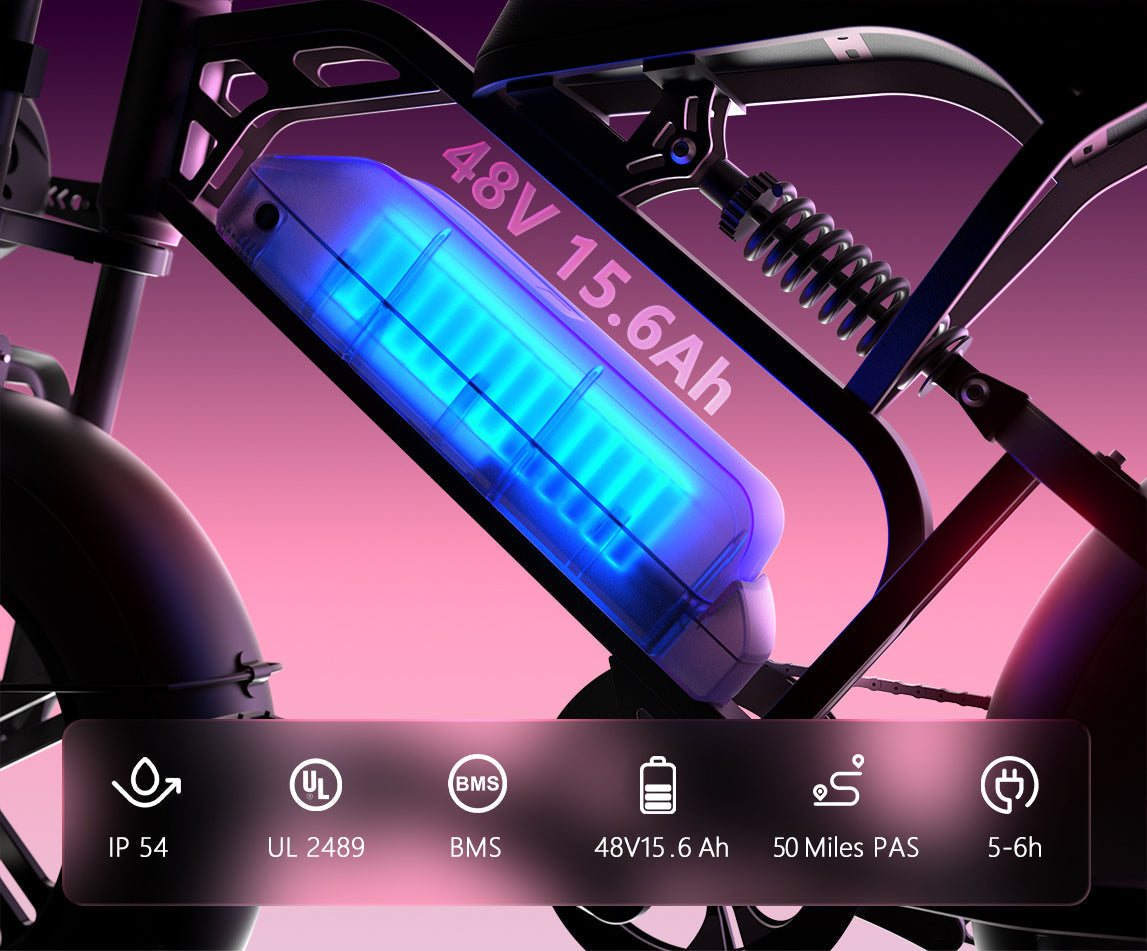
If you're new to electric bikes, it's natural to wonder whether leaving the charger plugged in overnight will damage the battery.
The good news is that most modern e-bike batteries cannot be truly overcharged. Once the battery reaches 100%, the Battery Management System (BMS) automatically stops the charging process to protect the battery cells.
However, that doesn't mean it's a good idea to leave your battery connected to the charger for days at a time. While the battery won't continue charging indefinitely, keeping it at a full charge for extended periods can gradually reduce its long-term lifespan.
If you're curious about how long an e-bike battery typically lasts before needing replacement, check out our guide on How Long Does an E-Bike Battery Last?
The best charging habits are simple:
-
Charge after riding when the battery has cooled.
-
Unplug the charger once charging is complete.
-
Store the battery at around 40%–60% if you won't be riding for several weeks.
How Does an E-Bike Battery Prevent Overcharging?

Modern e-bikes use lithium-ion batteries paired with a built-in Battery Management System (BMS).
The BMS constantly monitors:
-
Battery voltage
-
Temperature
-
Current
-
Individual cell balance
When the battery reaches full capacity, the BMS stops accepting additional charging current. This is why most quality e-bikes are protected against true overcharging.
Without a BMS, lithium batteries could become unstable, but nearly every reputable e-bike manufacturer includes this protection as a standard safety feature.
Is It Safe to Leave an E-Bike Charging Overnight?

For most riders, charging overnight occasionally is generally safe.
That said, it's still better to unplug the charger once charging is complete rather than leaving it connected all weekend.
Keeping a lithium-ion battery at 100% charge for long periods places additional stress on the cells. Over months or years, this can slightly reduce the battery's total usable capacity.
If possible:
-
Charge before your next ride instead of several days in advance.
-
Avoid storing a fully charged battery for extended periods.
-
Use the original charger supplied with your e-bike.
Planning to store your bike for the winter? Read How to Store an E-Bike Battery During Winter for step-by-step storage tips.
Charging Habits That Help Your Battery Last Longer
A few simple habits can significantly extend battery life.
Avoid Extreme Temperatures
Lithium-ion batteries perform best between 50°F and 77°F (10°C–25°C).
Avoid charging:
-
In direct sunlight
-
Inside a hot car
-
Below freezing temperatures
Let the Battery Cool First
After a long ride, the battery may still be warm.
Wait about 30–60 minutes before charging to allow it to return to room temperature.
Don't Always Drain It to 0%
Unlike older battery technologies, lithium-ion batteries don't need to be completely discharged before recharging.
Instead, try charging when the battery drops to around 20%–30%.
Store at Partial Charge
If you won't be riding for several weeks:
-
Charge to around 40%–60%
-
Store indoors in a cool, dry place
-
Check the battery every month or two
What Can Actually Damage an E-Bike Battery?
Most battery problems aren't caused by overcharging.
Instead, the biggest causes of battery degradation include:
-
Extreme heat
-
Deep discharges to 0%
-
Long-term storage at 100%
-
Using incompatible chargers
-
Physical impacts or water damage
-
Leaving the battery unused for many months
Avoiding these habits can add years to your battery's useful life.
If your battery seems to lose power much faster than expected, you may also want to read Why Is My E-Bike Battery Draining So Fast?
How Long Should You Charge an E-Bike Battery?

Charging time depends on battery capacity and charger output.
|
Battery Size |
Approximate Charging Time |
|
36V 10Ah |
4–5 hours |
|
48V 13Ah |
5–6 hours |
|
48V 15Ah |
6–7 hours |
|
48V 20Ah |
7–9 hours |
|
52V 20Ah |
8–10 hours |
Larger batteries naturally require more time to reach a full charge.
Battery size also affects riding distance. Learn more in How Far Can a 48V E-Bike Really Go?
Choosing an E-Bike with Reliable Battery Performance
A quality battery is just as important as motor power. Tamobyke electric bikes are equipped with premium lithium-ion batteries and intelligent Battery Management Systems (BMS) designed for safe charging and dependable daily performance.
Whether you're commuting to work or exploring weekend trails, choosing the right bike can make battery management easier and more efficient.
Browse our collection of Electric Bikes to compare models built for different riding styles.
If you're looking for a practical everyday commuter, check out the Tamobyke T63 Commuter Electric Bike, featuring a removable battery that makes charging at home or the office simple and convenient.
Final Thoughts
So, can you overcharge an e-bike battery?
For almost all modern e-bikes, the answer is no. Built-in battery management systems stop charging automatically once the battery reaches full capacity.
However, good charging habits still matter. Avoid leaving the battery fully charged for extended periods, keep it away from extreme temperatures, and use the original charger whenever possible. These simple practices will help maximize battery performance and extend its lifespan for years of reliable riding.
FAQs
Can I leave my e-bike plugged in overnight?
Occasionally, yes. Modern batteries include protection against overcharging, but unplugging the charger after it reaches full charge is still recommended whenever practical.
Should I charge my battery after every ride?
If you've used a significant portion of the battery, charging after each ride is perfectly fine. Lithium-ion batteries do not require complete discharge cycles.
Is it bad to charge my battery every day?
No. Frequent charging is normal for lithium-ion batteries and is generally better than repeatedly draining the battery to empty.
What's the best battery level for long-term storage?
Around 40%–60% is ideal if you won't be riding for several weeks or months.


Share:
30-Day Commuter E-Bike Review: Is Switching Worth It?
Why Is My E-Bike Battery Draining So Fast? 10 Common Causes and Fixes