
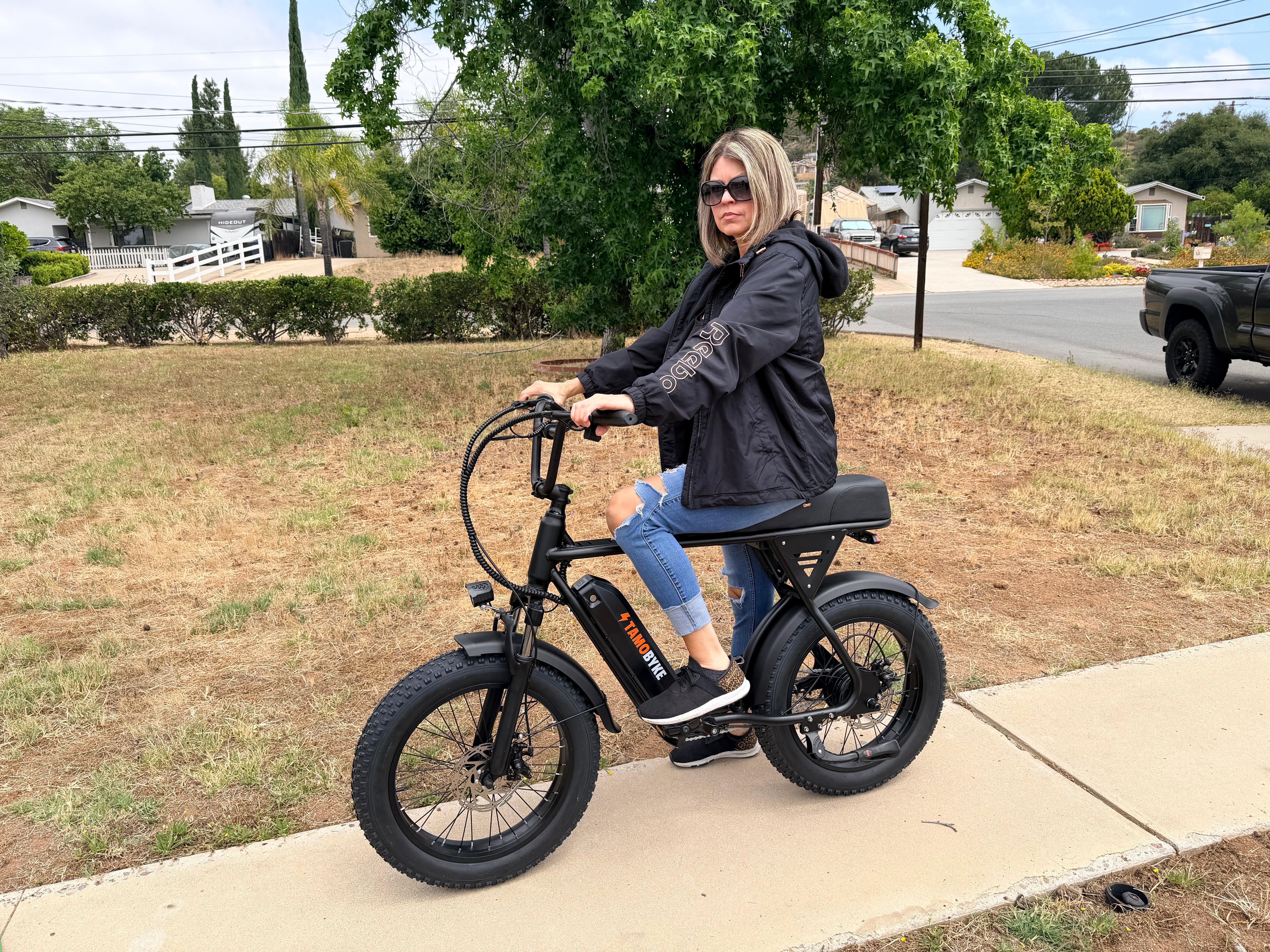
Electric bikes are heavier than traditional bicycles because they combine traditional bike components with additional electric systems, including motors, batteries, controllers, suspension components, and reinforced frames.
On average, most electric bikes weigh between 45 and 75 pounds, while fat tire and high-performance eBikes often weigh 80 pounds or more due to larger motors, higher-capacity batteries, stronger frames, and upgraded components.
Tamobyke electric bikes are designed for riders who want powerful performance, comfortable rides, long-range capability, and all-terrain versatility. Depending on the model, Tamobyke eBikes typically weigh between 64 and 116 pounds, with heavier models offering higher power output, larger batteries, stronger frames, and improved stability for demanding riding conditions.
While a heavier eBike may require more effort to transport, the additional weight often provides meaningful advantages, including better stability at higher speeds, improved durability, stronger climbing ability, and a more confident riding experience.
Explore Tamobyke Electric Bikes
Quick Overview: Average eBike Weights
|
eBike Category |
Average Weight |
|
Lightweight eBikes |
35–50 lbs |
|
Commuter eBikes |
50–75 lbs |
|
Fat Tire eBikes |
60–95+ lbs |
|
High-Performance eBikes |
80–120+ lbs |
Tamobyke Electric Bike Weight Range: 64.41–115.57 lbs
💡 Key Takeaway:
A heavier electric bike is not necessarily a disadvantage. Extra weight usually comes from larger batteries, stronger motors, wider tires, and reinforced frames—features that improve power, comfort, and stability.
4 Main Factors That Affect Tamobyke eBike Weight
Frame Material + Motor Power + Battery Capacity + Features = Total eBike Weight
1. Frame Material
The frame is one of the biggest contributors to an electric bike’s total weight. A stronger frame allows an eBike to support heavier riders, handle rough terrain, and maintain stability at higher speeds.
|
Frame Material |
Weight Profile |
Best For |
Benefits |
|
Aluminum Alloy |
Lightweight |
Daily commuting, recreational riding |
Rust-resistant, responsive handling, easier transportation |
|
Reinforced Heavy-Duty Frames |
Heavier |
Off-road riding, high-power eBikes, heavier loads |
Increased durability, improved stability, higher load capacity |
Tamobyke uses durable frames designed to balance strength, comfort, and performance across different riding styles.
2. Motor Size & Power Output
The motor is another major factor affecting eBike weight.
Higher-powered motors typically require larger housings, stronger internal components, and improved cooling systems.
500W Motors
Approximate Weight Contribution: 7–10 lbs
Common on commuter-focused models. Provides efficient performance for city riding, daily transportation, and moderate hills.
750W–1000W Motors
Approximate Weight Contribution: 10–12 lbs
A popular choice for riders who want stronger acceleration, higher speeds, and better climbing ability.
1000W+ High-Performance Motors
Approximate Weight Contribution: 12–15+ lbs
Designed for riders who need maximum power, off-road capability, and strong performance under heavier loads.
Tamobyke models such as the V20 Pro, V29, and T73 series use high-output motors built for riders who want more speed, torque, and versatility.
3. Battery Capacity
The battery is one of the heaviest components on an electric bike.
Most eBike batteries weigh approximately 7–15 pounds, depending on capacity and voltage.
Smaller Battery Systems
-
Lower overall bike weight
-
Easier transportation
-
Suitable for shorter daily rides
Larger Battery Systems
-
Increased riding range
-
More consistent power delivery
-
Better for commuting, long-distance riding, and adventure use
Tamobyke high-performance models feature larger battery systems to provide extended range while maintaining strong motor performance.
4. Additional Features & Components
Performance-focused features add weight but improve the riding experience.
Common weight-adding components include:
-
20” x 4” fat tires for improved traction
-
Front suspension systems
-
Hydraulic or mechanical disc brakes
-
Larger frames
-
Rear racks and utility accessories
-
High-capacity batteries
These upgrades help Tamobyke eBikes perform better on gravel, trails, uneven roads, and everyday commuting routes.
eBike Categories & Weight Ranges
|
Category |
Weight Range |
Best Use |
|
Lightweight eBike |
35–50 lbs |
Urban riding, easy storage |
|
Commuter eBike |
50–75 lbs |
Daily transportation |
|
Fat Tire eBike |
60–95+ lbs |
Mixed terrain, comfort riding |
|
High-Power Performance eBike |
90–120+ lbs |
Off-road riding, maximum power |
Lightweight eBikes (35–50 lbs)
Best for riders who need easy transportation, apartment storage, or frequent bike loading.
Commuter eBikes (50–75 lbs)
A balance between portability, battery range, and everyday comfort.
Fat Tire eBikes (60–95+ lbs)
Designed for stability, traction, and riding on surfaces like gravel, dirt, sand, and uneven roads.
High-Performance eBikes (90–120 lbs)
Built for riders who prioritize power, speed, range, and off-road capability.
Tamobyke Electric Bike Weight Comparison Chart
|
Model |
Weight |
Best Use Case |
|
Tamobyke T63 |
64.41 lbs |
Affordable commuter riding and daily transportation |
|
Tamobyke V20 |
84 lbs |
Powerful fat tire riding and versatile commuting |
|
Tamobyke T16 |
86 lbs |
Balanced performance and all-terrain riding |
|
Tamobyke V29 Pro |
97 lbs |
High-performance riding with improved stability |
|
Tamobyke T73 |
99.42 lbs |
Powerful commuting and adventure riding |
|
Tamobyke TB20 |
100 lbs |
Fat tire performance and utility riding |
|
Tamobyke V29 |
101.2 lbs |
Long-range riding and high-power performance |
|
Tamobyke V20 Pro |
103 lbs |
Maximum power and extended-range riding |
|
Tamobyke T73 Max |
107.85 lbs |
Premium performance and longer-distance riding |
|
Tamobyke T73 Pro Max |
115.57 lbs |
Ultimate power, stability, and off-road capability |
Weight Trade-Offs: How Weight Changes Your Ride
Portability & Storage
Lighter eBikes (Under 70 lbs)
Advantages:
-
Easier to lift
-
More convenient for apartments and garages
-
Easier to transport with standard bike racks
Example:
Tamobyke T63 (64.41 lbs) provides a lighter option for riders who want easier handling.
Heavier eBikes (90+ lbs)
Advantages:
-
Larger batteries
-
Stronger frames
-
More powerful motors
-
Better stability at higher speeds
Models like the Tamobyke T73 Pro Max are designed for riders who prioritize performance over portability.
Ride Handling & Stability
Lightweight eBikes
-
Faster steering response
-
Easier maneuverability
-
Better for city environments
Heavier eBikes
-
More stable at higher speeds
-
Smoother over rough terrain
-
More confidence on trails and uneven roads
For riders looking for maximum stability, heavier Tamobyke models provide a planted and controlled riding experience.
Frequently Asked Questions
How much does a Tamobyke electric bike weigh?
Tamobyke electric bikes typically weigh between 64.41 lbs and 115.57 lbs, depending on the model, battery size, motor power, and included components.
The lightweight Tamobyke T63 weighs 64.41 lbs, while the performance-focused T73 Pro Max weighs 115.57 lbs.
Why are Tamobyke electric bikes heavier than regular bikes?
Electric bikes are heavier because they include additional components that traditional bicycles do not have:
-
Electric motor
-
Rechargeable battery
-
Controller system
-
Reinforced frame
-
Fat tires
-
Suspension components
These additions provide benefits such as higher speed, longer range, stronger climbing ability, and improved comfort.
Is a 100-pound electric bike too heavy?
A 100-pound electric bike is common among high-performance fat tire eBikes.
While it may be harder to lift, the extra weight usually comes from:
-
Larger batteries
-
More powerful motors
-
Stronger frames
-
Wider tires
These features improve stability, durability, and overall riding confidence.
What is the average weight of a fat tire electric bike?
Most fat tire electric bikes weigh between 60 and 95 pounds.
High-performance models with larger motors, bigger batteries, dual suspension, or reinforced frames can exceed 100 pounds.
The additional weight helps improve traction and stability on gravel, dirt, sand, and uneven terrain.
Are heavier electric bikes better?
Not always. The best eBike weight depends on your riding needs.
A heavier eBike usually provides:
-
More powerful motors
-
Larger battery capacity
-
Better stability
-
Stronger frames
-
Improved off-road performance
A lighter model is better for transportation and storage, while heavier models are better for riders who prioritize power and range.
Can you ride a Tamobyke eBike if the battery dies?
Yes. You can still pedal a Tamobyke electric bike without motor assistance.
However, heavier models require more effort because of their larger frames, motors, batteries, and tires.
Using pedal-assist modes makes riding easier and helps reduce physical effort.
What is the lightest Tamobyke electric bike?
The Tamobyke T63 is currently the lightest model in the lineup, weighing 64.41 lbs with the battery installed.
It is a great choice for riders who want an affordable electric bike with easier handling while still enjoying electric assistance and comfortable daily riding.
Final Thoughts: Does eBike Weight Matter?
Electric bike weight is not just about portability—it reflects the bike’s performance, capability, and intended purpose.
A lighter eBike may be easier to carry, while a heavier Tamobyke eBike can provide:
-
More power
-
Longer range
-
Better stability
-
Stronger durability
-
Improved off-road performance
Whether you choose the lightweight Tamobyke T63 or the powerful T73 Pro Max, selecting the right weight depends on how and where you plan to ride.


Share:
E-Bike Tire Size Guide: How to Choose the Right Tires for Your Electric Bike