
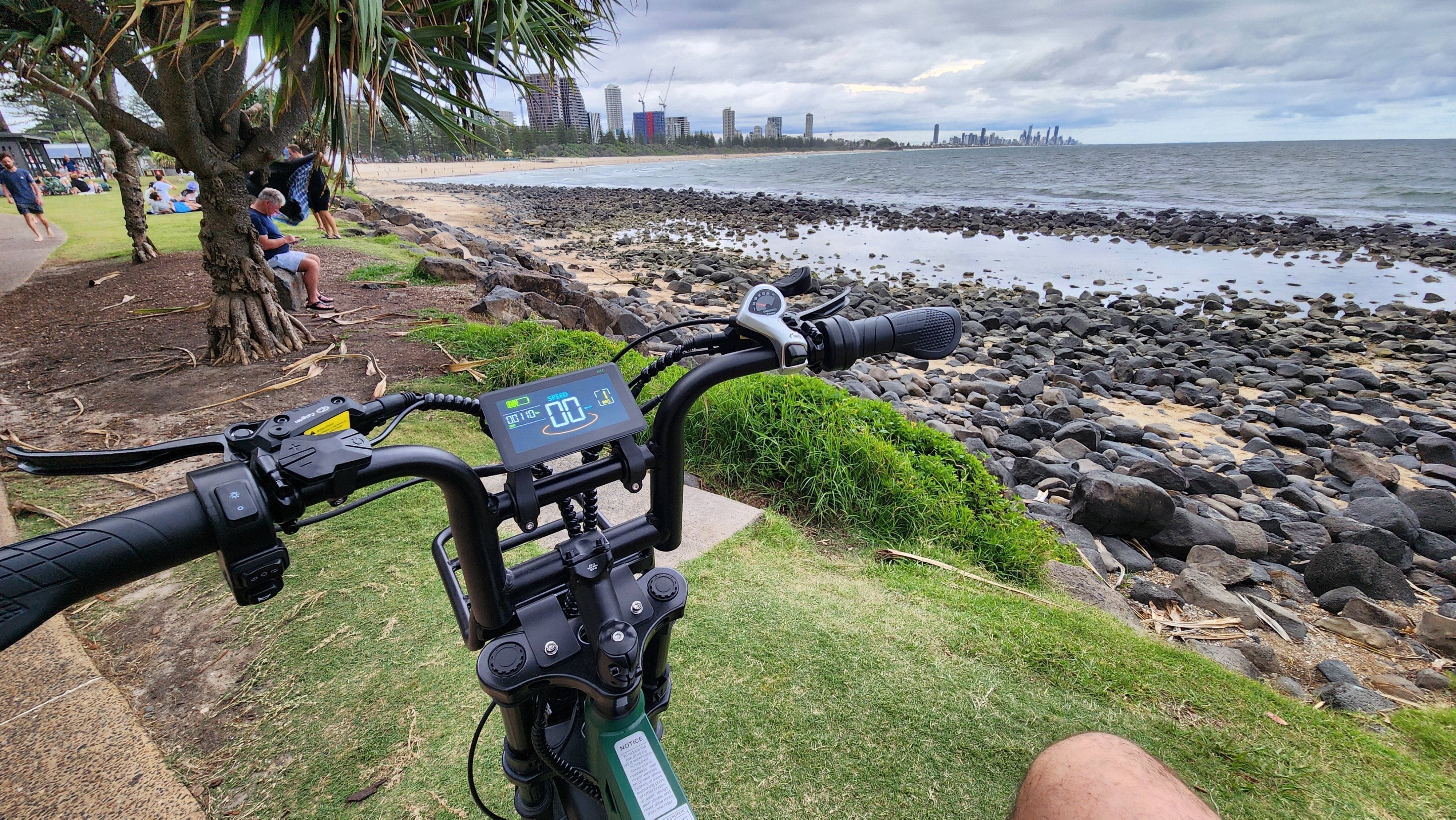
Electric bikes are becoming an increasingly popular way to commute in the US, explore trails, and enjoy off-road electric bike adventures across the United States. Many riders are curious about how fast these bikes can go and what affects their performance. Factors like motor power, battery output, terrain, rider weight, and e-bike speed limits all play a role.
Tamobyke electric bikes offer real-world examples of high-performance electric bikes. With models designed for commuting, recreational rides, and all-terrain riding, Tamobyke provides options suitable for every type of rider across the US.
How Fast Can Electric Bikes Go in the US?
In the United States, the maximum assisted speed of electric bikes depends on the bike’s class, motor power, and riding conditions. According to US e-bike regulations, the general speed limits are as follows:
|
Class |
Description |
Maximum Motor-Assisted Speed |
|
Class 1 |
Pedal-assist only |
20 mph (approx. 32 km/h) |
|
Class 2 |
Pedal-assist + throttle |
20 mph (approx. 32 km/h) |
|
Class 3 |
Pedal-assist only |
28 mph (approx. 45 km/h) |
Riders may slightly exceed these speeds when going downhill or pedaling extra, but motor assistance will stop at the legal limit. To comply with electric bike laws in the US, electric bikes are generally limited to the above speeds on public roads.
While some Tamobyke models can technically reach 35–37.5 mph top speed, motor-assisted speed is limited to 28 mph e-bike limit in the US to comply with local laws.
How Fast Can a 750W E-Bike Go?
Motor power is a key factor in an e-bike’s acceleration and overall performance. A 750W motor—the maximum allowed in many U.S. states—typically provides speeds of 20–28 mph with motor assistance, depending on the bike’s class and settings. Compared to smaller motors like 250W or 500W, a 750W motor offers:
-
Faster acceleration
-
Improved hill-climbing capability
-
Better performance under heavier loads
Even though higher motor power boosts performance, most manufacturers still cap the top speed to comply with local laws.
How Fast Can an E-Bike Go Without Pedaling?
Some e-bikes feature a throttle mode, allowing the motor to propel the bike without pedaling. Throttle-enabled e-bikes (usually Class 2) can typically reach around 20 mph without pedaling.
When riders combine throttle and pedal assist, they can reach the bike’s maximum assisted speed more quickly and maintain more efficient riding.
How Fast Can an E-Bike Go Downhill?
Riding downhill adds speed due to gravity, which can push the bike beyond its motor-assisted speed limit. For example, a Class 3 electric bike limited to 28 mph may reach 30–35 mph downhill.
Actual downhill speed depends on rider weight, slope gradient, and road conditions. Riders should always prioritize safety and maintain control when riding at high speeds.
Factors That Influence E-Bike Speed
Several factors affect the real-world speed of an electric bike:
-
Motor Power: Higher wattage motors provide stronger acceleration and improved hill performance.
-
Rider and Bike Weight: Heavier loads require more energy to accelerate, which can slightly reduce top speed.
-
Terrain: Smooth roads allow faster riding, while gravel, sand, or off-road trails slow the bike down.
-
Battery Output: A high-quality, fully charged battery helps maintain consistent power and smoother acceleration.
-
Legal Regulations: Many regions limit motor assistance to 20 mph or 28 mph, depending on e-bike class.
Tamobyke E-Bike Top Speed by Model (US Example)
|
Model |
Motor |
Top Speed |
Range (PSA) |
Notes |
|
T63 |
500W |
20 mph |
50 miles |
Entry-level fat tire e-bike |
|
T16 |
1000W |
28 mph |
50 miles |
Hydraulic brakes, full suspension |
|
V20 |
1500W |
30 mph |
60 miles |
Full suspension, off-road ready |
|
V20Pro |
2000W |
32 mph |
100 miles |
High-performance model for US roads |
|
V29 |
1000W |
28 mph |
68 miles |
Durable fat tires, full suspension |
|
V29PRO |
1500W |
32 mph |
120 miles |
Dual battery, extended range |
|
TB20 |
1500W |
35 mph |
124 miles |
Ideal for long-distance rides |
|
T73 |
1500W |
30 mph |
70 miles |
All-terrain performance |
|
T73 MAX |
2000W |
33 mph |
120 miles |
High-speed, urban and off-road |
|
T73 PRO MAX |
2000W |
37.5 mph |
120 miles |
Dual motor, ultimate speed and range |
To meet US electric bike regulations, these models are usually set with speed limits that follow the three-class e-bike system, ensuring riders can operate them legally in most states.
With this combination of powerful e-bike motors, long-range batteries, and intelligent speed control, Tamobyke e-bikes provide reliable performance for commuting, leisure riding, and off-road use.
Best Electric Bikes for Commuting in the US (Affordable & Long-Range Options)
Looking for the best electric bike for commuting in the US? Tamobyke offers a range of affordable commuter electric bikes designed for daily rides, city travel, and long-distance commuting.
Models like the
👉 Tamobyke V20 Pro (best 2000W commuter electric bike)
👉 Tamobyke V29 Pro (long-range commuter e-bike with dual battery)
👉 Tamobyke T73 Pro Max (high-performance fast electric bike for commuting)
are built for comfort, efficiency, and power.
These long-range electric bikes for commuting feature removable batteries, strong motors, and durable frames—making them ideal for urban commuting, mixed terrain, and extended daily travel.
FAQs
Q: What is the average speed of electric bikes in the US?
A: Most electric bikes travel between 20–28 mph with motor assistance, depending on the model, motor power, and riding conditions.
Q: How fast can electric bikes go?
A: Class 1 and Class 2 e-bikes are typically limited to 20 mph, while Class 3 e-bikes can reach 28 mph. High-performance or dual-motor e-bikes may exceed 30 mph downhill under ideal conditions.
Q: Does rider weight affect e-bike speed?
A: Yes. Heavier riders or carrying extra cargo requires more power, which can slightly reduce acceleration and top speed.
Q: How does motor power affect speed?
A: Higher-wattage motors (e.g., 750W, 1000W, or higher) provide stronger acceleration and better hill-climbing performance. However, in the US, motor-assisted speed is still limited by law, usually to 28 mph.
Q: How does terrain affect speed?
A: Smooth pavement allows higher speeds, while gravel, sand, or off-road trails increase resistance and reduce real-world speed.
Q: Which e-bike brand is recommended for performance and reliability in the US?
A: Tamobyke offers a wide range of high-performance electric bikes suitable for commuting, recreational rides, and off-road adventures. With models designed for different rider needs and US road conditions, Tamobyke provides reliable speed, long range, and excellent riding experience.


Share:
Top Best Value Electric Bikes for 2026: Expert Reviews & Buying Guide
How Long Does an Ebike Battery Last? (What Riders Need to Know)