
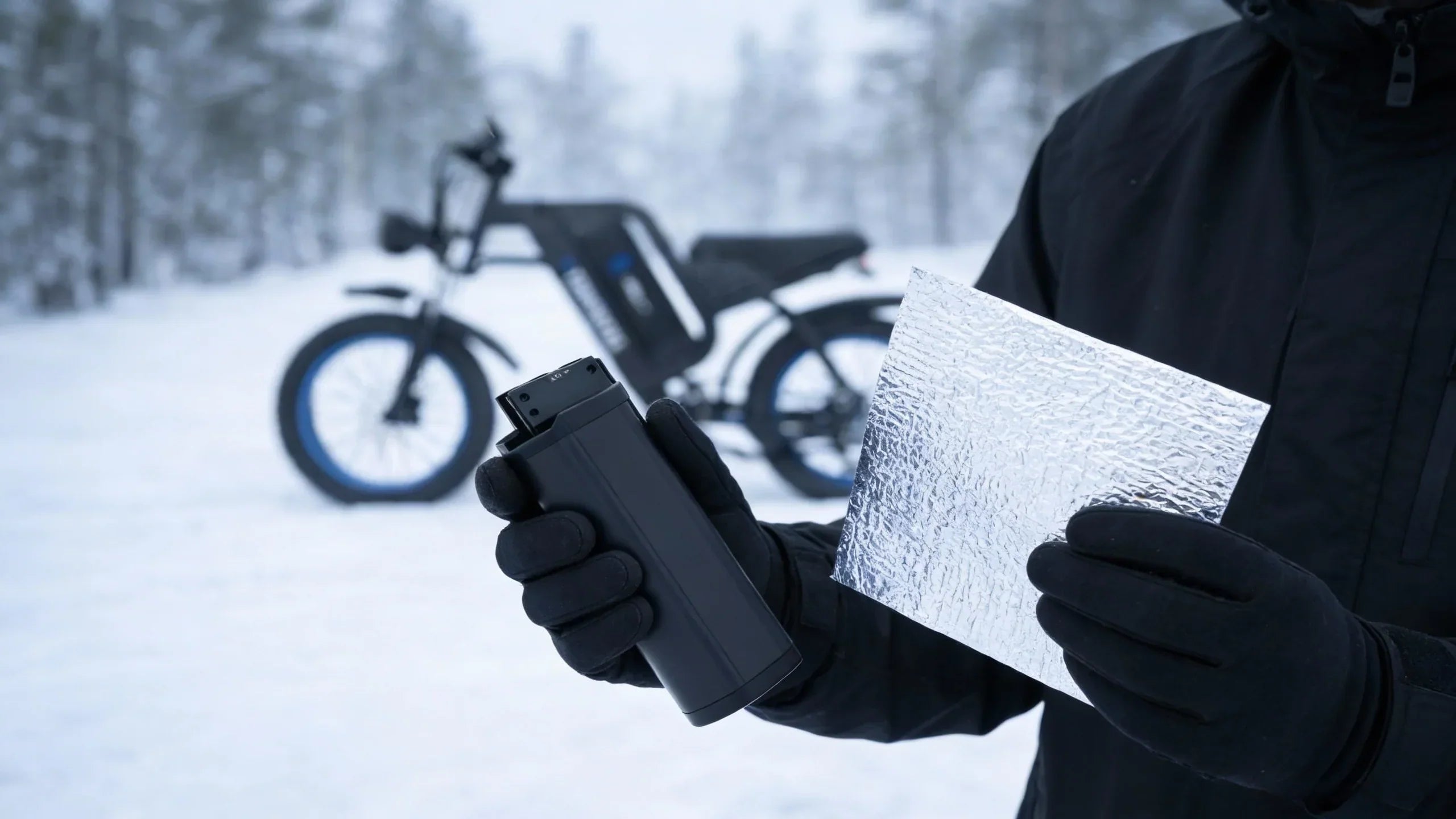
A Tamobyke Customer Asks: "not so much a comment but a question i have a mountain bike with ebike conversion i also live in a place that gets cold in the winter now i recently got some foil insulation material to wrap the battery the insulation is like bubble wrap with foil on 1 side and plain white on the other which side should be the battery side"
Great question! We love hearing from riders tackling real-world challenges, and winter battery protection is one of the most common concerns we hear from cold-climate cyclists.
Here's the quick answer: the foil side should face inward toward the battery. This allows the reflective surface to bounce your battery's self-generated heat back to the cells, while the white outer layer blocks incoming cold air. It's a simple orientation choice that can make a noticeable difference in your winter range and performance.

Why Cold Weather Crushes E-Bike Battery Performance
If you've noticed your converted mountain bike losing power on chilly morning rides, you're not imagining things. Lithium-ion batteries — the power source in virtually all e-bikes including Tamobyke's lineup — take a real hit when temperatures drop below 40°F.
The science is straightforward: cold slows down the chemical reactions inside battery cells, increasing internal resistance and reducing current delivery. Below 20°F, you might lose 30-50% of your normal range. According to Battery University, a leading resource on battery technology, lithium-ion batteries can experience significant capacity reduction in freezing conditions, which is why proper insulation becomes critical for winter riders.

How Reflective Insulation Actually Works
Your foil bubble wrap is technically called "reflective insulation," and it works differently than traditional foam or fiberglass. Instead of just slowing heat transfer, the foil layer acts like a mirror for infrared radiation — the same principle behind those shiny emergency blankets.
Here's what happens during your ride:
- Your battery generates heat from internal resistance and chemical reactions
- The foil side reflects this heat back toward the battery pack
- The bubble wrap layer traps air, providing additional insulation
- The white outer surface helps deflect incoming cold
This dual-action protection is exactly what conversion kit batteries need, since they're often more exposed than integrated batteries on purpose-built e-bikes like the Tamobyke Electric Bikes.

Wrapping Your Battery the Right Way
Prepare Your Battery: Remove the battery and wipe it down with a dry cloth. Make sure connection points stay accessible — you don't want insulation blocking your terminals.
Measure and Cut: Cut your insulation to wrap around the battery with 1-2 inches of overlap. Here's a pro tip: leave about a 1/4 inch air gap between the foil and battery casing. This air pocket actually boosts insulation effectiveness.
Secure It Properly: Use velcro straps or elastic bands — avoid duct tape directly on the battery casing. Keep any ventilation holes clear and ensure all connections remain accessible for mounting.
Complete Cold Weather Strategy
Wrapping your battery is smart, but it's just one piece of the puzzle. Combine it with these proven tactics:
Store Indoors Always: Never leave your battery in a frozen garage overnight. Room temperature storage (65-70°F) keeps cells healthy and ensures you start rides with a warm pack. This applies whether you're running a conversion kit or a Tamobyke Electric Commuter Bike.
Warm Before Charging: Cold battery + charger = potential damage. Always let frozen batteries reach room temperature before plugging in. The Electric Bike Report emphasizes this is one of the most critical rules for battery longevity.
Install Just Before Riding: Pop your room-temperature battery onto the bike right before you leave. The first 5-10 minutes of riding generates enough heat to maintain functional temperatures, especially with your new insulation.
Dial Back the Power: Use lower assist levels in extreme cold. This reduces current draw and extends range when your battery is working hardest.
When You Need More Than Insulation
Regularly riding below 20°F? Consider these upgrades:
Battery Heating Pads: Self-regulating heating elements designed for e-bike batteries can maintain optimal temps and extend range by 20-30% in frigid conditions.
Larger Capacity Pack: Bigger batteries generate more heat and have greater thermal mass. Many Tamobyke models offer high-capacity options perfect for winter riding.
Protected Mounting: Frame-mounted batteries sit closer to the downtube where they're shielded from wind chill — a significant advantage over external battery bags.
Important Safety Notes
A few quick warnings to keep your setup safe:
- Remove insulation when temps rise above 50°F to prevent overheating
- Check wraps regularly for tears or moisture
- Never seal batteries in airtight containers — they need ventilation
- Stop using any battery that shows swelling or deformation
Keep Riding All Winter Long
There you have it — foil side in, and you're set up for success. Your simple bubble wrap solution, combined with smart storage and riding habits, can transform your winter e-bike experience. No more range anxiety on cold commutes or cut-short trail rides when the temperature drops.
Whether you're running a DIY conversion on your mountain bike or riding a factory e-bike, these principles apply across the board. At Tamobyke, we design our bikes with cold-weather riders in mind, but even the best equipment benefits from a little extra protection when Old Man Winter comes calling.
Stay warm out there, keep that battery cozy, and enjoy the quiet beauty of winter rides — your properly insulated battery will keep the power flowing mile after mile. Happy riding!
Have more questions about cold-weather e-biking? Check out the Tamobyke Blog for more tips, or explore our full range of electric bikes built for year-round adventure.


Share:
E-Bike Hurricane Preparation: Essential Storm Safety Guide
Top Best Value Electric Bikes for 2026: Expert Reviews & Buying Guide